

Public travel plan
A Hidden-Mexico Explorer’s 28-Day Journey Through Caves, Canyons, Colonial Cities and Bioluminescent Shores
This is a source-faithful, high-variety Mexico route built entirely around the destinations and timing advice described by the creator. Expect long overland transfers between regions; confirm local transport, water cond…
Source videos
Travel inspiration behind this plan

Plan notes
Useful context before you go
This is a source-faithful, high-variety Mexico route built entirely around the destinations and timing advice described by the creator. Expect long overland transfers between regions; confirm local transport, water conditions, guide availability and seasonal access before booking. For cenotes, arrive at the entrance at 8:00 a.m.; May–September offers the most dramatic light. Sumidero Canyon is best on the water by 8:00 a.m. from November–April. Tamul Waterfall is brightest from November–May. Visit Pátzcuaro and Janitzio in late October for Day of the Dead, observing cemetery vigils respectfully. Xochimilco is chaotic on Saturday afternoons but quiet and misty at sunrise on Tuesdays. San Miguel de Allende is calmer on Tuesday or Wednesday fall days. Hike Tepozteco on a Tuesday morning in October. For Isla Holbox and Puerto Escondido bioluminescence, target a new moon; Holbox is strongest May–September and Puerto Escondido November–March. Montebello’s lake colors are sharpest early in the morning from December–April. Pack swimwear, quick-dry clothing, sun protection, sturdy trail shoes, a dry bag, insect repellent, a headlamp for dark environments and cash for local guides and boats. Treat Indigenous communities, sacred spaces, cemeteries and wildlife as places to observe respectfully.
Itinerary highlights
What is in this plan
Days 1-4 Yucatán Cenotes and the Underwater World
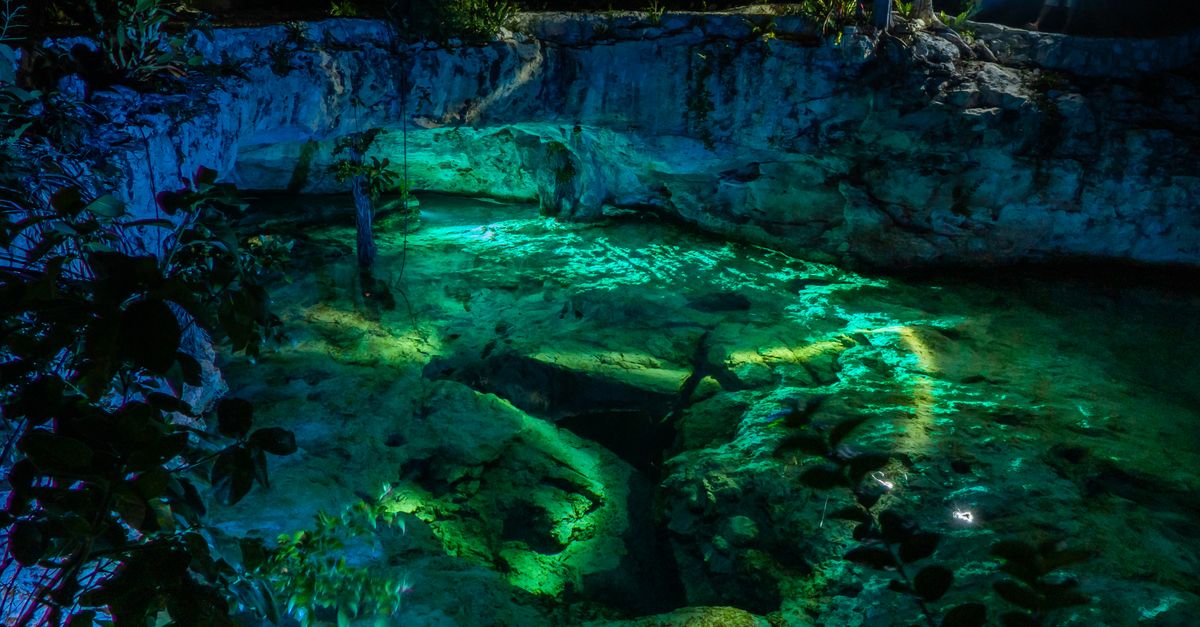
Base yourself on the Yucatán Peninsula and start each cenote day early. The creator specifically recommends an 8:00 a.m. arrival for a more solitary experience; May–September is the strongest window for shafts of light.
-
Yucatán CenotesCenote Dos Ojos, Tulum, Quintana Roo, Mexico
Arrive at 8:00 a.m. for the quietest atmosphere and the best chance of having the entrance largely to yourself.
Watch the source moment on YouTube ↗ -
Yucatán CenotesCenote Dos Ojos, Tulum, Quintana Roo, Mexico
Swim through the clear 75-degree water and look for stalactites resembling frozen waterfalls.
Watch the source moment on YouTube ↗ -
Yucatán CenotesCenote Dos Ojos, Tulum, Quintana Roo, Mexico
Choose an open-air jungle pool for a bright, expansive swim rather than a claustrophobic cave environment.
Watch the source moment on YouTube ↗ -
Yucatán CenotesCenote Dos Ojos, Tulum, Quintana Roo, Mexico
Use the cenotes as a cultural stop as well as a swimming stop: they were regarded by the ancient Maya as gateways to Xibalba, the underworld.
Watch the source moment on YouTube ↗ -
Yucatán CenotesCenote Dos Ojos, Tulum, Quintana Roo, Mexico
If entering a darker cave section, bring a headlamp and use only permitted routes; the underwater cave system is extensive and should not be explored independently.
Watch the source moment on YouTube ↗ -
Yucatán CenotesCenote Dos Ojos, Tulum, Quintana Roo, Mexico
For dramatic beams through the water, plan the visit between May and September, while still prioritizing the early arrival.
Watch the source moment on YouTube ↗
Days 5-7 Chiapas: Sumidero Canyon
Spend three days around the canyon and its river access. Get on the water by 8:00 a.m. between November and April for softer morning light, cooler conditions and better wildlife-viewing atmosphere.
-
Sumidero CanyonSumidero Canyon National Park, Chiapas, Mexico
Take a small boat onto the emerald Grijalva River and let the canyon walls reveal themselves gradually from the water.
Watch the source moment on YouTube ↗ -
Sumidero CanyonSumidero Canyon National Park, Chiapas, Mexico
Look straight upward from the boat to appreciate the sheer scale of the cliffs, which rise roughly 3,000 feet above the water.
Watch the source moment on YouTube ↗ -
Sumidero CanyonSumidero Canyon National Park, Chiapas, Mexico
Keep watch along the banks for crocodiles sunning themselves beside the boat.
Watch the source moment on YouTube ↗ -
Sumidero CanyonSumidero Canyon National Park, Chiapas, Mexico
Watch for waterfalls dropping into the canyon mist; keep a dry layer or waterproof bag for spray.
Watch the source moment on YouTube ↗ -
Christmas Tree FormationChristmas Tree Formation, Sumidero Canyon National Park, Chiapas, Mexico
Look for the mineral-and-moss formation known locally as the Christmas Tree, jutting sideways from the canyon wall.
Watch the source moment on YouTube ↗ -
Sumidero Canyon RimSumidero Canyon National Park Viewpoints, Chiapas, Mexico
Use the quiet canyon setting to learn the story of Indigenous resistance associated with the cliffs; approach the legend with respect rather than treating it as spectacle.
Watch the source moment on YouTube ↗
Days 8-11 Huasteca Potosina and Tamul Waterfall
Use four days for the Huasteca Potosina because the waterfall network is dispersed and includes a demanding paddle. The brightest turquoise conditions are described as November–May during the dry season.
-
Tamul Waterfall TrailTamul Waterfall, Aquismón, San Luis Potosí, Mexico
Hike through the dense, humid trail toward the sound of the falls; wear shoes with reliable grip and expect wet conditions.
Watch the source moment on YouTube ↗ -
Tamul Waterfall Panga LaunchTamul Waterfall Boat Launch, Aquismón, San Luis Potosí, Mexico
Join a local Tenek-guided wooden panga excursion and paddle against the current toward the falls.
Watch the source moment on YouTube ↗ -
Tamul Waterfall TrailTamul Waterfall, Aquismón, San Luis Potosí, Mexico
Round the canyon bend for the main reveal: the 344-foot curtain of water falling directly from the jungle cliff.
Watch the source moment on YouTube ↗ -
Tamul Waterfall TrailTamul Waterfall, Aquismón, San Luis Potosí, Mexico
Photograph the electric turquoise water created by dissolved limestone, but avoid assuming the color will be identical after heavy rain.
Watch the source moment on YouTube ↗ -
Tamul Waterfall TrailTamul Waterfall, Aquismón, San Luis Potosí, Mexico
Look for the cave section where a ceiling opening sends sunlight into the water like an illuminated pool.
Watch the source moment on YouTube ↗ -
Huasteca Potosina Waterfall NetworkHuasteca Potosina, San Luis Potosí, Mexico
Explore the wider network of more than 30 wild waterfalls, which is managed directly by Indigenous T'boli communities; favor locally operated access.
Watch the source moment on YouTube ↗
Days 12-15 Lake Pátzcuaro, Janitzio and Morelia
Base in the Lake Pátzcuaro region, then continue to Morelia. Late October is the meaningful seasonal window for the candlelit vigils; be a quiet, respectful observer around island cemeteries.
-
Lake PátzcuaroLake Pátzcuaro, Michoacán, Mexico
Take a small boat across the glassy lake and watch local fishermen use large butterfly-shaped nets.
Watch the source moment on YouTube ↗ -
Janitzio IslandJanitzio Island, Pátzcuaro, Michoacán, Mexico
Visit Janitzio Island’s steep settlement and monument rising from the middle of the lake.
Watch the source moment on YouTube ↗ -
Pátzcuaro Historic CenterPátzcuaro Historic Center, Michoacán, Mexico
Walk Pátzcuaro’s white walls, red-tiled roofs and twin colonial plazas while noticing the continuing presence of Purépecha language and culture.
Watch the source moment on YouTube ↗ -
Janitzio Island CemeteryJanitzio Island Cemetery, Pátzcuaro, Michoacán, Mexico
During Day of the Dead, observe the all-night vigils surrounded by candles and orange marigolds without intruding or treating graves as props.
Watch the source moment on YouTube ↗ -
Morelia Historic CenterMorelia Historic Center, Michoacán, Mexico
Explore Morelia’s intact colonial avenues and pink quarry-stone buildings, especially as late light warms the façades.
Watch the source moment on YouTube ↗ -
Morelia Historic CenterMorelia Historic Center, Michoacán, Mexico
Seek the hidden courtyards and bubbling fountains that sit behind the city’s preserved façades.
Watch the source moment on YouTube ↗
Days 16-20 Mexico City, Xochimilco and Tepoztlán
Use Mexico City as a base for Xochimilco, then spend time in Tepoztlán. For quiet canals and farm views, visit Xochimilco at Tuesday sunrise; for a livelier boat atmosphere, choose Saturday afternoon. Tackle Tepozteco on a Tuesday morning in October to reduce weekend crowds.
-
Xochimilco CanalsEmbarcadero Nuevo Nativitas, Xochimilco, Mexico City, Mexico
Board a flat-bottomed wooden trajinera and drift through the canal network rather than treating Xochimilco as a quick photo stop.
Watch the source moment on YouTube ↗ -
La Isla de las MuñecasIsla de las Muñecas, Xochimilco, Mexico City, Mexico
Look for the island associated with the legend of La Llorona as the canals become quieter and more overgrown.
Watch the source moment on YouTube ↗ -
Xochimilco ChinampasXochimilco Chinampas, Mexico City, Mexico
For quiet misty farm views, arrive at sunrise on Tuesday and watch for herons in the shallows.
Watch the source moment on YouTube ↗ -
Xochimilco Flower ChinampasXochimilco Flower Market and Chinampas, Mexico City, Mexico
See the rows of orange cempasúchil along the water and the farmers still cultivating crops on ancient artificial islands.
Watch the source moment on YouTube ↗ -
Xochimilco Axolotl HabitatXochimilco Ecological Park, Mexico City, Mexico
Look beneath willow roots for the endangered axolotl, the salamander known for regenerating lost limbs; keep wildlife-viewing expectations realistic.
Watch the source moment on YouTube ↗ -
Tepozteco PyramidTepozteco Pyramid, Tepoztlán, Morelos, Mexico
Climb the steep forest trail roughly 1,200 feet to the cliffside pyramid; carry water and allow time for the ascent and descent.
Watch the source moment on YouTube ↗
Days 21-23 San Miguel de Allende and Peña de Bernal
Explore San Miguel on Tuesday or Wednesday in the fall for fewer crowds, then continue into Querétaro’s high desert for Bernal. March–May is the stated window for hiking two-thirds of the monolith without ropes.
-
Parroquia de San Miguel ArcángelParroquia de San Miguel Arcángel, San Miguel de Allende, Guanajuato, Mexico
Visit La Parroquia in the evening, when the salmon-pink stone appears to glow in the setting sun.
Watch the source moment on YouTube ↗ -
San Miguel de Allende Historic CenterSan Miguel de Allende Historic Center, Guanajuato, Mexico
Walk the cobblestone streets for terracotta walls, dusty-rose façades and bougainvillea spilling over old stone buildings.
Watch the source moment on YouTube ↗ -
San Miguel de Allende Main PlazaEl Jardín, San Miguel de Allende, Guanajuato, Mexico
After dark, listen for mariachi in the plazas beneath warm street lamps and baroque architecture.
Watch the source moment on YouTube ↗ -
Peña de BernalPeña de Bernal, Bernal, Querétaro, Mexico
Approach Peña de Bernal from the flat farmland so the isolated volcanic plug rises dramatically from the horizon.
Watch the source moment on YouTube ↗ -
Peña de Bernal Hiking RoutePeña de Bernal Trailhead, Bernal, Querétaro, Mexico
Hike as high as permitted without ropes, aiming for the March–May window described for reaching roughly two-thirds of the way up.
Watch the source moment on YouTube ↗ -
Bernal Historic TownBernal Historic Center, Querétaro, Mexico
Walk the quiet cobblestone town at the monolith’s base and watch the rock shift from gray to gold to orange through the day.
Watch the source moment on YouTube ↗
Days 24-26 Isla Holbox and Puerto Escondido
This is the trip’s coastal and nighttime-wildlife phase. Holbox’s brightest bioluminescence is described for a new moon from May–September; Puerto Escondido’s strongest combination of swells and glowing water is described for a new moon from November–March.
-
Isla HolboxIsla Holbox, Quintana Roo, Mexico
Arrive by ferry and explore the car-free island by bicycle or golf cart across its powdery white sand.
Watch the source moment on YouTube ↗ -
Isla Holbox Whale Shark WatersWhale Shark Area, Isla Holbox, Quintana Roo, Mexico
Look offshore for whale sharks and keep a respectful distance if swimming alongside them through a regulated excursion.
Watch the source moment on YouTube ↗ -
Holbox Southern LagoonsYum Balam Nature Reserve, Isla Holbox, Quintana Roo, Mexico
Visit the southern lagoons for mirror-like water and pink flamingos wading through the shallows.
Watch the source moment on YouTube ↗ -
Holbox Bioluminescent BeachPunta Cocos, Isla Holbox, Quintana Roo, Mexico
On a dark new-moon night, enter the water carefully to see bioluminescent plankton leave blue-green trails around movement.
Watch the source moment on YouTube ↗ -
Zicatela BeachZicatela Beach, Puerto Escondido, Oaxaca, Mexico
Watch the massive surf from a safe distance at Zicatela rather than entering the powerful shorebreak unless properly qualified and locally advised.
Watch the source moment on YouTube ↗ -
Puerto Escondido Bioluminescent BayPuerto Escondido, Oaxaca, Mexico
After dark, look for waves breaking in neon blue and time the visit around a new moon from November–March for the stated combination of swells and glowing water.
Watch the source moment on YouTube ↗
Days 27-28 Montebello Lakes and Real de Catorce Finale
Finish with two highland landscapes that reward early starts. Montebello is clearest from December–April in the early morning; Real de Catorce requires patience at its one-way mountain tunnel and is best experienced as an overnight finale rather than a rushed stop.
-
Lagunas de MontebelloLagunas de Montebello National Park, Chiapas, Mexico
Arrive early to see the shifting indigo, emerald and turquoise lakes before fog and changing light alter the colors.
Watch the source moment on YouTube ↗ -
Lagunas de Montebello Hiking TrailsLagunas de Montebello National Park Trails, Chiapas, Mexico
Walk between several of the park’s 59 lakes to compare how depth and mineral content change the color from one sinkhole to the next.
Watch the source moment on YouTube ↗ -
Laguna TziscaoLaguna Tziscao, Lagunas de Montebello National Park, Chiapas, Mexico
Take a traditional wooden raft across one of the deepest lakes for a water-level perspective.
Watch the source moment on YouTube ↗ -
Ogarrio TunnelOgarrio Tunnel, Real de Catorce, San Luis Potosí, Mexico
Enter Real de Catorce through the dark, one-way tunnel carved through solid mountain rock; expect a slow approach and limited traffic flow.
Watch the source moment on YouTube ↗ -
Real de Catorce Historic CenterReal de Catorce Historic Center, San Luis Potosí, Mexico
Walk the abandoned silver-era streets, crumbling mansions and empty theaters as an open-air historical landscape.
Watch the source moment on YouTube ↗ -
Parroquia de la Purísima ConcepciónParroquia de la Purísima Concepción, Real de Catorce, San Luis Potosí, Mexico
End at the pink stone church among the ruins, then watch the sun set over the surrounding peaks and high-desert emptiness.
Watch the source moment on YouTube ↗