

Public travel plan
A Rail Strategist’s South Korea High-Speed Train Route
This is a transport-focused South Korea itinerary built only from the supplied rail guidance. Use Naver Map or Kakao Map rather than Google Maps for directions. Reserve KTX tickets several days ahead on weekdays, at lea…

Source videos
Travel inspiration behind this plan
Plan notes
Useful context before you go
This is a transport-focused South Korea itinerary built only from the supplied rail guidance. Use Naver Map or Kakao Map rather than Google Maps for directions. Reserve KTX tickets several days ahead on weekdays, at least a week ahead for weekends, and one month ahead for major holidays. SRT seats may sell out weeks to a month ahead. Compare rail and intercity bus prices and journey times before booking; buses can be around 30% cheaper on longer routes. Use the Korail Talk app or Korail website for KTX, ITX, and Mugunghwa services, and the SRT app or website for SRT. Save the QR ticket on your phone, remember the numeric booking password, travel light, and arrive at stations about 45 minutes early. Economy class is usually sufficient; first class offers more space, snacks, bottled water, and better luggage capacity. Wheelchair users should select first class wheelchair seats in car 2 and contact station staff in advance. Children aged 6–12 receive approximately 50% off and children under 6 ride free with an accompanying adult. Pack a small carry-on, phone charger, portable battery, and offline screenshots of your tickets and station information. The source material does not provide sightseeing, accommodation, restaurant, or visually inferred-location recommendations, so this plan intentionally stays focused on named rail stations, routes, booking points, and boarding logistics.
Resources for this plan
Shared by the source creators. These are not VibePlanit endorsements and may be affiliate links.
Itinerary highlights
What is in this plan
Days 1-2 Seoul rail setup
Base yourself near central Seoul while learning the Korail system and preparing longer journeys. Seoul Station is the practical focus; reserve longer-distance tickets before leaving the city.
-
Seoul StationSeoul Station, Bongnae-dong, Jung-gu, Seoul
Begin at Seoul Station after arriving by subway. Follow Exit 1 and the KTX signs; the signs continue through the escalator route into the station.
-
Seoul Station Ticket KiosksSeoul Station Ticket Kiosks, Seoul, South Korea
Use the ticket counters or kiosks beside them for Korail purchases. Online booking is preferable, but the station provides the same core booking steps.
-
Korail Travel Center Seoul StationKorail Travel Center, Seoul Station, Seoul, South Korea
Stop at the Korail Travel Center if you need help with a route, booking, changes, or refunds.
-
Seoul StationSeoul Station, Hangang-daero, Yongsan-gu, Seoul
Use the station’s restaurants, convenience stores, cafes, and pharmacies to prepare food, drinks, or basic supplies before departure.
-
Seoul Station Departure BoardsSeoul Station Departure Boards, Seoul, South Korea
Practice reading the departure displays and wait for the track number, which is shown approximately 15 minutes before departure.
-
Seoul StationSeoul Station, Bongnae-dong, Jung-gu, Seoul
Use the Korail Talk app or Korail website to compare KTX, ITX, and Mugunghwa departures. The Korail Pass is only potentially worthwhile for multiple cities within a short period.
Day 3 Seoul to Suwon test ride
Use a short southbound rail journey to rehearse the full process: ticket purchase, platform identification, car number, luggage storage, and boarding.
-
Seoul Station Ticket CountersSeoul Station Ticket Counters, Seoul, South Korea
Purchase a short-distance ticket from Seoul Station on a slower weekday if you want to test on-site purchasing with less pressure.
-
Seoul Station Mugunghwa PlatformSeoul Station Mugunghwa Platform, Seoul, South Korea
Board the Mugunghwa service toward Suwon as the demonstrated low-cost, slower alternative to high-speed rail.
-
Suwon StationSuwon Station, Suwon, South Korea
Use the 35-minute Seoul–Suwon ride as a practical orientation journey; the demonstrated ticket cost was approximately 2,700 Korean won.
-
Suwon Station Ticket AreaSuwon Station Ticket Area, Suwon, South Korea
Read the paper ticket carefully: train time, train number, final destination, car number, and seat number are printed there, but the track number is not.
-
Suwon Station PlatformsSuwon Station Platforms, Suwon, South Korea
Find the platform from the station signs and displays rather than relying on the ticket alone. Confirm the train number and departure time before descending.
-
Suwon Station Train PlatformSuwon Station Train Platform, Suwon, South Korea
Use this ride to practice locating the correct car and seat. Larger bags go in the storage area near the train entrance; smaller bags fit above the seats.
Days 4-5 Southern rail options
Plan the major southbound movement from Seoul. Choose Korail from Seoul Station for Busan and many central or western destinations, or SRT from Suseo when staying in southeastern Seoul. Build the route around confirmed train availability.
-
Seoul StationSeoul Station, Bongnae-dong, Jung-gu, Seoul
Use Seoul Station for Korail routes toward Busan, Gyeongju, Daejeon, Yeosu, Mokpo, and Gangneung. Reserve early because popular services sell out.
-
Suseo StationSuseo Station, Seoul, South Korea
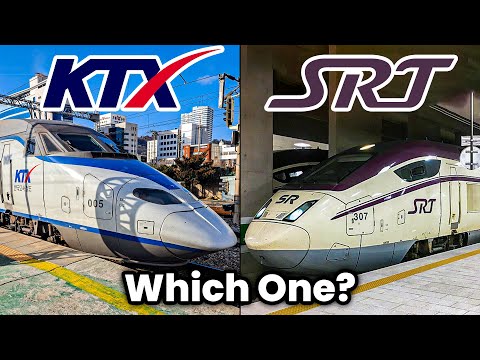
Use Suseo Station when departing from southeastern Seoul. SRT is slightly cheaper than KTX in the demonstrated Seoul–Busan comparison and has newer trains, but availability can disappear quickly.
-
Busan StationBusan Station, 206 Jungang-daero, Dong-gu, Busan, South Korea
For the Seoul–Busan comparison, the demonstrated SRT fare was about 52,000 won versus approximately 60,000 won for KTX. Treat these as source examples and verify current prices before booking.
-
Osong StationOsong Station, Cheongju, South Korea
Do not assume every city pair has a direct train. Busan–Mokpo requires a transfer at Osong by rail, while a direct bus may take about the same time for roughly half the price.
-
Mokpo StationMokpo Station, Mokpo, South Korea
Compare total time and total price in Naver Map or Kakao Map before committing to a long transfer. This is especially important for Busan–Mokpo.
-
Busan Station KTX Boarding AreaBusan Station KTX Boarding Area, Busan, South Korea
Choose economy for standard seating, or first class when you value extra legroom, reclining space, snacks, bottled water, and additional luggage capacity.
Day 6 Boarding confidence and return planning
Finish with a repeatable station routine for future journeys: arrive early, confirm the platform and car, board with a QR ticket, and compare return options before peak travel dates.
-
Seoul Station KTX EntranceSeoul Station KTX Entrance, Seoul, South Korea
Arrive approximately 45 minutes early, especially if you have substantial luggage or need assistance. Alert station staff before boarding if support is required.
-
Seoul Station KTX PlatformSeoul Station KTX Platform, Seoul, South Korea
Confirm the car number on the platform. KTX and SRT car positions generally align with the markings on the ground.
-
Seoul Station KTX TrainSeoul Station KTX Train, Seoul, South Korea
Store large suitcases in the luggage area near the entrance and smaller bags above the seats. Regular bicycles require disassembly in a bike bag or box.
-
Seoul Station KTX TrainSeoul Station KTX Train, Seoul, South Korea
Use the onboard Wi-Fi when available, and look for power outlets or USB ports, though their availability is not predictable on every train.
-
KTX Passenger CabinKTX Passenger Cabin, Seoul, South Korea
Eat and drink courteously at your seat. Trains usually provide trays, reading lights, ventilation, sun shades, bathrooms between cars, and sometimes vending machines.
-
KTX Arrival Information ScreensKTX Arrival Information Screens, Seoul, South Korea
Listen for English announcements and check the screens above the seats as arrival approaches. These cues help prevent missing your stop.