

Public travel plan
A Slow Cultural Journey Through Bhutan’s Valleys and Monasteries
This source-faithful six-day plan follows the supplied route through Phuentsholing, Thimphu, Punakha and Paro. It is designed for a slow, culturally focused traveler: allow buffer time on mountain roads, use a local gui…
Source videos
Travel inspiration behind this plan
Plan notes
Useful context before you go
This source-faithful six-day plan follows the supplied route through Phuentsholing, Thimphu, Punakha and Paro. It is designed for a slow, culturally focused traveler: allow buffer time on mountain roads, use a local guide and taxi or tour vehicle, and avoid self-driving. Carry your passport or original voter ID, passport photos, warm layers, light trekking clothing, comfortable shoes, motion-sickness medicine, personal medicines, water and a light daypack. The source recommends checking permits and accommodation requirements before arrival; Indian travelers need an entry permit, and the source states that approved three-star accommodation, a guide and hired transport are required. Tourist SIM cards are available at the airport or main gate, UPI is accepted in many places, and network coverage can weaken in remote areas. Respect monastery rules, begin sightseeing early, and keep luggage light. The trek-focused day requires hydration and flexible layers. The source identifies March–May and September–November as pleasant periods, December–February for snow, and warns about monsoon rain and landslides. Food options mentioned include ema datshi, kewa datshi, momos, butter tea, fried rice, noodles, dosa and Indian vegetarian meals.
Itinerary highlights
What is in this plan
Days 1: Jaigaon, Phuentsholing and the road to Thimphu
Cross early if using the land route: the source recommends reaching the border around 7:00 AM. Keep luggage light because bags must be carried and scanned at the border. The Phuentsholing–Thimphu journey is approximately 165 km but can take five to six hours on mountain roads; sit near the front and carry motion-sickness medicine if needed.
-
Bagdogra AirportBagdogra Airport, West Bengal, India
Use Bagdogra as the airport gateway for the land route. The source describes continuing by bus or taxi toward Jaigaon, approximately 150 km and around four hours away.

-
New Jalpaiguri Railway StationNew Jalpaiguri Railway Station, Siliguri, West Bengal, India
New Jalpaiguri is identified as a practical rail gateway. From here, continue toward Hasimara if a direct bus to Jaigaon is unavailable.
-
JaigaonJaigaon, West Bengal, India
Jaigaon is the Indian border town. The source gives a local bus benchmark of ₹200–₹300 and a private taxi benchmark of ₹2,000–₹3,000. If arriving late, stay overnight here and cross the next morning.
-
Phuentsholing Immigration OfficePhuentsholing Immigration Office, Phuentsholing, Bhutan
Complete the entry permit formalities here when entering by land. Bring a passport or original voter ID, passport photos and hotel booking information; the source specifically says Aadhaar is not accepted.
-
Phuentsholing GatePhuentsholing Gate, Phuentsholing, Bhutan
Cross the single gate separating Jaigaon and Phuentsholing. Carry your own bags for scanning rather than relying on vehicle luggage handling, as described in the source.
-
ThimphuThimphu, Bhutan
Use Thimphu as the first overnight base. The source describes the capital as a peaceful Himalayan city at approximately 7,700 feet, with hotels near the city center and cafes and markets within reach.
Day 2: Thimphu viewpoints, living culture and local food
Keep the day centered in Thimphu and start after breakfast. This phase combines a major hilltop statue, a living cultural museum, an animal preserve and vegetarian-friendly food. Leave time for an evening return to the market and cafes.
-
Buddha Dordenma StatueBuddha Dordenma Statue, Kuensel Phodrang, Thimphu, Bhutan
Visit this hilltop Buddha statue after breakfast. The source describes the bronze figure as 51.5 metres tall and the project as completed in 2015.
-
Simply BhutanSimply Bhutan, Thimphu, Bhutan
Use the living museum for a concentrated introduction to traditional Bhutanese domestic life. The welcome includes ara, followed by a traditional house, wooden interiors and an old-style kitchen.
-
Simply BhutanSimply Bhutan, Thimphu, Bhutan
Try the archery experience here, Bhutan’s national sport according to the source. The same visit includes butter tea and cultural explanations of protective wooden phallus symbols.
-
Mountain Cafe ThimphuMountain Cafe, Thimphu, Bhutan
Stop here for lunch. The source specifically mentions masala dosa, tea and simple vegetarian meals, making this a useful stop for the requested source-faithful vegetarian food trail.
-
Motithang Takin PreserveMotithang Takin Preserve, Thimphu, Bhutan
Visit the preserve for a quieter wildlife stop. The source describes takin as Bhutan’s national animal, notes a ₹300 entry ticket, and emphasizes that the animals are kept in a natural forest-like environment rather than traditional cages.
-
Thimphu MarketThimphu Market, Thimphu, Bhutan
Return here in the evening if energy allows. The source recommends Thimphu’s market and cafes as a relaxed way to end the sightseeing day.
Day 3: Dochula Pass and Punakha’s historic valley
This is a scenic mountain-road day. Start early, keep buffer time for the drive and use the pass as a meaningful break before continuing into Punakha Valley. The source recommends returning to Thimphu after the Punakha sights.
-
Dochula PassDochula Pass, Bhutan
Pause at the pass for Himalayan scenery and the Druk Wangyal Chortens. Mountain weather can change quickly, so keep a warm layer accessible.
-
Druk Wangyal ChortensDruk Wangyal Chortens, Dochula Pass, Bhutan
Spend time among the 108 memorial chortens, identified in the source as Druk Wangyal Chortens and built to honour Bhutanese military personnel.
-
Dochula CafeDochula Cafe, Dochula Pass, Bhutan
Take the recommended coffee break at this pass cafe. The source specifically calls its coffee popular.
-
Punakha ValleyPunakha Valley, Bhutan
Continue into Punakha Valley after the pass. The source frames the route as a scenic transition with green landscapes and Himalayan views rather than a fast transfer.
-
Punakha DzongPunakha Dzong, Punakha, Bhutan
Explore the former capital’s major fortress-monastery. The source explains that Punakha was Bhutan’s capital until 1955, that the dzong contains administrative and monastic sections, and that royal events were held here.
-
Punakha Suspension BridgePunakha Suspension Bridge, Punakha, Bhutan
Walk to this approximately 160-metre suspension bridge connecting a nearby village. The source recommends taking photographs and video from the bridge.
Day 4: Chuzom and Paro’s cultural landmarks
Move from Thimphu toward Paro and keep the day focused on river scenery, aviation views, shopping, food, museum history and fortress architecture. Paro is the stronger shopping base according to the source, with handmade cultural products and traditional textiles.
-
Chuzom ConfluenceChuzom Confluence, Bhutan
Stop where the Paro Chuu and Thimphu Chuu rivers meet. The source describes a peaceful riverside atmosphere and a scenic bridge.
-
Paro Airport View PointParo Airport View Point, Paro, Bhutan
Use this viewpoint for the full runway and surrounding valley. The source highlights Paro’s challenging daylight-only operations and the limited number of specially trained pilots qualified to land here.
-
Paro MarketParo Market, Paro, Bhutan
Shop for handicrafts, souvenirs, handmade textiles and traditional Bhutanese products. The source says Paro is generally better and cheaper for shopping than Thimphu.
-
Mountain Cafe ParoMountain Cafe, Paro, Bhutan
Stop for lunch at the Paro branch. The source mentions dosa and rice and specifically considers the Paro branch’s food better than the Thimphu branch.
-
National Museum of BhutanNational Museum of Bhutan, Paro, Bhutan
Visit the former watchtower museum for Bhutanese history, traditional weapons, royal artefacts, thangka paintings and older cultural objects. The circular architecture is itself part of the visit.
-
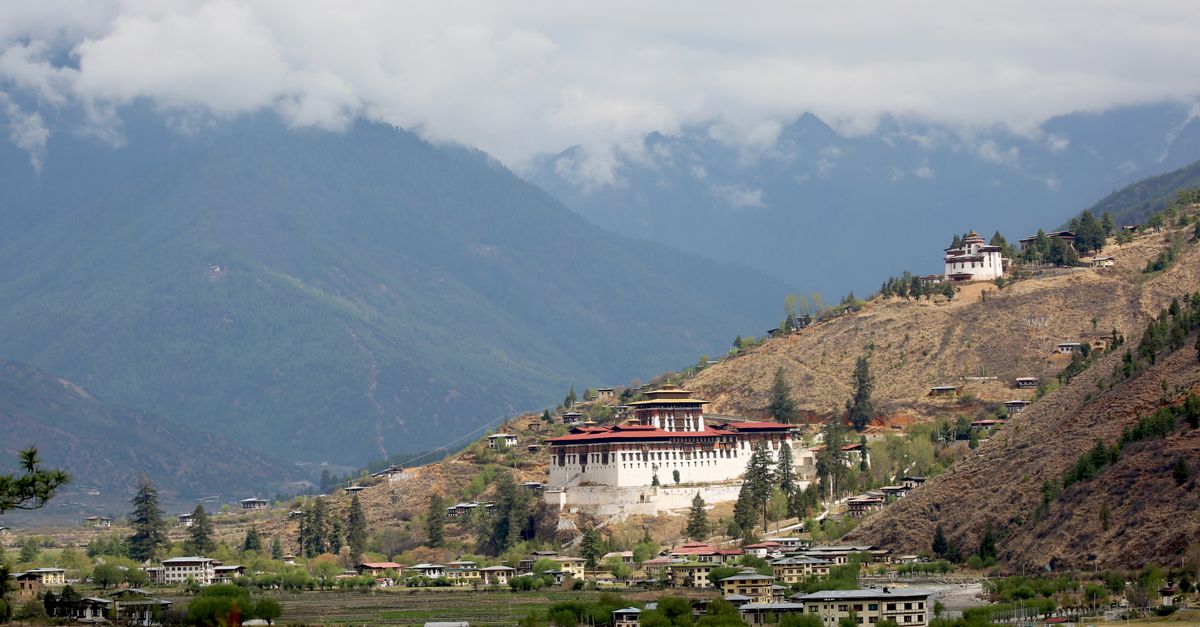
Rinpung DzongRinpung Dzong, Paro, Bhutan
Explore this hilltop fortress-monastery, still described as an important religious and administrative centre of Paro.
Day 5: Tiger’s Nest trek and a restorative evening in Paro
Begin the trek around 6:00–7:00 AM. The route is approximately 12 km round trip and can take five to seven hours, with substantial elevation gain. Wear light removable layers, carry water and a light bag, and consider a horse only for the first half if appropriate. After the trek, the source mentions arranging a massage through the driver.
-
Tiger's Nest Monastery Trek Base PointTiger's Nest Monastery Trek Base Point, Paro, Bhutan
Arrive early at the trek base, described as approximately 8,500 feet in elevation. Start before the route becomes busy and keep the day free for the full return journey.
-
Tiger's Nest Horse TrailTiger's Nest Horse Trail, Paro, Bhutan
The source says horses can be taken for the first half to the cafeteria area, with a seasonal cost of approximately ₹1,000–₹2,000. Arrange the return horse in advance if you want one waiting later.
-
Tiger's Nest Cafeteria View PointTiger's Nest Cafeteria View Point, Paro, Bhutan
Use this halfway viewpoint as the main rest stop. The source mentions tea, snacks and lunch here, along with a full view of the monastery. The harder descent-and-climb section begins afterward.
-
Tiger's Nest MonasteryParo Taktsang, Paro, Bhutan
Complete the final stairs and narrow path to the monastery. The source describes a descent followed by a climb across the mountain before reaching the entrance, so keep your pace controlled.
-
Paro Taktsang CaveParo Taktsang Cave, Paro, Bhutan
Spend quiet time inside the monastery and cave complex. The source connects the site with Guru Padmasambhava’s meditation and the legend of his arrival on a tigress’s back; follow monastery rules strictly.
-
ParoParo, Bhutan
Return to Paro after the descent. If you want recovery time, ask the driver about arranging the massage mentioned in the source after the trek.
Day 6: Paro departure and return to India
Choose between the long land return and a flight from Paro. The source describes the road return as an eight-to-ten-hour journey, with three to four hours to the border and another four to five hours toward Bagdogra. A return flight avoids the long road transfer and provides a scenic mountain departure.
-
Paro International AirportParo International Airport, Paro, Bhutan
Use Paro International Airport if choosing the faster return. The source describes a daytime-only flight environment and calls the mountain takeoff a memorable ending.
-
Phuentsholing GatePhuentsholing Gate, Phuentsholing, Bhutan
For the overland return, allow three to four hours to reach the border from Paro according to the source. Leave early because the complete journey toward Bagdogra can take eight to ten hours.
-
Phuentsholing Immigration OfficePhuentsholing Immigration Office, Phuentsholing, Bhutan
Complete the exit-side border formalities before crossing into Jaigaon. Keep identity documents accessible throughout the transfer.
-
JaigaonJaigaon, West Bengal, India
Cross back into the Indian border town before continuing by road. The source presents Jaigaon as the land-route gateway on both arrival and departure.
-
Bagdogra AirportBagdogra Airport, West Bengal, India
Continue toward Bagdogra after the border. The source estimates approximately four to five hours from the border to Bagdogra, so do not schedule a tight onward connection.
-
New Jalpaiguri Railway StationNew Jalpaiguri Railway Station, Siliguri, West Bengal, India
Use New Jalpaiguri if continuing by train rather than flying. The source identifies it as a principal rail gateway and recommends it over relying on the limited trains serving Hasimara.