

Public travel plan
An 8-Day Algarve Hiking, History & Atlantic Cliffs Route
This source-faithful route is built around coastal hiking, historic places, dramatic Atlantic viewpoints, caves, and mountain landscapes. Pack sturdy walking shoes, a reusable water bottle, sunscreen, a hat, and a light…
Source videos
Travel inspiration behind this plan
Plan notes
Useful context before you go
This source-faithful route is built around coastal hiking, historic places, dramatic Atlantic viewpoints, caves, and mountain landscapes. Pack sturdy walking shoes, a reusable water bottle, sunscreen, a hat, and a light jacket: the Seven Hanging Valleys Trail has little shade and strong reflected UV even under cloud, while Mount Fóia can feel cool at altitude. Carry enough water for exposed coastal walks, use a paper map or offline map for trails, and expect strong wind around Sagres and Cabo de São Vicente. Winter is milder than much of Portugal but can be around 10–15°C with heavy rain and humidity, so bring warm layers and rain protection. The route moves east to west from Albufeira and Loulé through Lagos, the central hiking coast, Monchique, and finally Sagres.
Itinerary highlights
What is in this plan
Days 1-2 Albufeira Beaches & Loulé Traditions
Use Albufeira as the first coastal base, combining cliff walks and beaches with an inland visit to calmer, more traditional Loulé. Praia da Falésia is particularly striking near sunset, while Praia dos Pescadores is livelier and more crowded. If traveling during February or March, align this phase with Loulé Carnival.
-
AlbufeiraAlbufeira, Algarve, Portugal
Explore Albufeira's connected beach paths and wooden cliffside boardwalks, allowing time for viewpoints and quieter sandy alternatives away from the main route.

-
Praia da FalésiaPraia da Falésia, Olhos de Água, Algarve, Portugal
Walk the long Praia da Falésia shoreline from the Olhos de Água side. The red and golden cliffs can glow dramatically in late sunlight; keep back from unstable edges.
-
Olhos de ÁguaOlhos de Água, Algarve, Portugal
Start or finish the Praia da Falésia walk at Olhos de Água, where the beach and tall coastal cliffs form an accessible scenic base.
-
Praia dos PescadoresPraia dos Pescadores, Albufeira, Portugal
Visit the 225-metre Praia dos Pescadores for its golden sand, cafés, bars, and social atmosphere. It is especially crowded in summer; choose it for energy rather than solitude.
-
Mercado Municipal de LouléMercado Municipal de Loulé, Loulé, Portugal
Browse Mercado Municipal de Loulé for Portuguese food, fresh seafood, spices, cheeses, local products, and handmade crafts, then pause for coffee and a traditional Portuguese dessert around the town square.
-
Loulé CarnivalLoulé Carnival, Loulé, Portugal
If your dates fall in February or March, attend Loulé Carnival. The three-day celebration combines samba energy, Portuguese satire, music, dancing, giant floats, confetti, and a low-cost entry ticket of about €2 as described in the source.
Days 3-4 Lagos History & Ponta da Piedade
Base in compact Lagos, where the historic center is walkable and the itinerary shifts from urban history to golden-hour coastal scenery. Reserve the later part of the second day for Ponta da Piedade, choosing the boardwalk for cliff views or a kayak or small boat for caves and narrow passages.
-
LagosLagos, Portugal
Walk Lagos's compact historic center, which can be crossed on foot in under half an hour while still revealing streets shaped by the Age of Discovery and the city's former importance as a Portuguese port.
-
Lagos Old Town WallsLagos Old Town Walls, Lagos, Portugal
Follow the old town walls for a concentrated look at Lagos's defensive history and elevated urban viewpoints.
-
Igreja de Santo AntónioIgreja de Santo António, Lagos, Portugal
Visit Church of Saint Anthony through the museum entrance. The relatively plain exterior gives way to an ornate interior covered in gilded woodwork, and the church dates back to 1707 with later Baroque rebuilding.
-
Lagos MuseumLagos Museum, Lagos, Portugal
Use the Lagos museum stop to understand the city's and region's history beyond its beaches before continuing to the church interior.
-
Lagos Art GalleryLagos Art Gallery, Lagos, Portugal
Visit the small art gallery mentioned in the historic center, where works reflect Lagos's long appeal to painters and artists.
-
Lagos Slavery History ExhibitionLagos Slavery History Exhibition, Lagos, Portugal
Make time for the slavery history exhibition in Lagos. It addresses Portugal's role in the Atlantic slave trade and the documented 1344 slave auction in the city; approach this as a serious historical visit.
-
Ponta da PiedadePonta da Piedade, Lagos, Portugal
Reach Ponta da Piedade for sunrise or sunset, when the rock formations and cliffs take on deep golden tones. Explore from the cliffside boardwalk, or book a kayak or small boat to enter the caves and narrow openings.
Days 5-6 Seven Hanging Valleys & Monchique Mountains
This is the most active phase. Start the Seven Hanging Valleys Trail early enough to manage heat and exposure, carry plenty of water, and treat the 12-kilometre round trip as a substantial walk. Follow it with the cooler, higher Mount Fóia landscape, where a jacket and sun protection are both useful.
-
Seven Hanging Valleys TrailSeven Hanging Valleys Trail, Algarve, Portugal
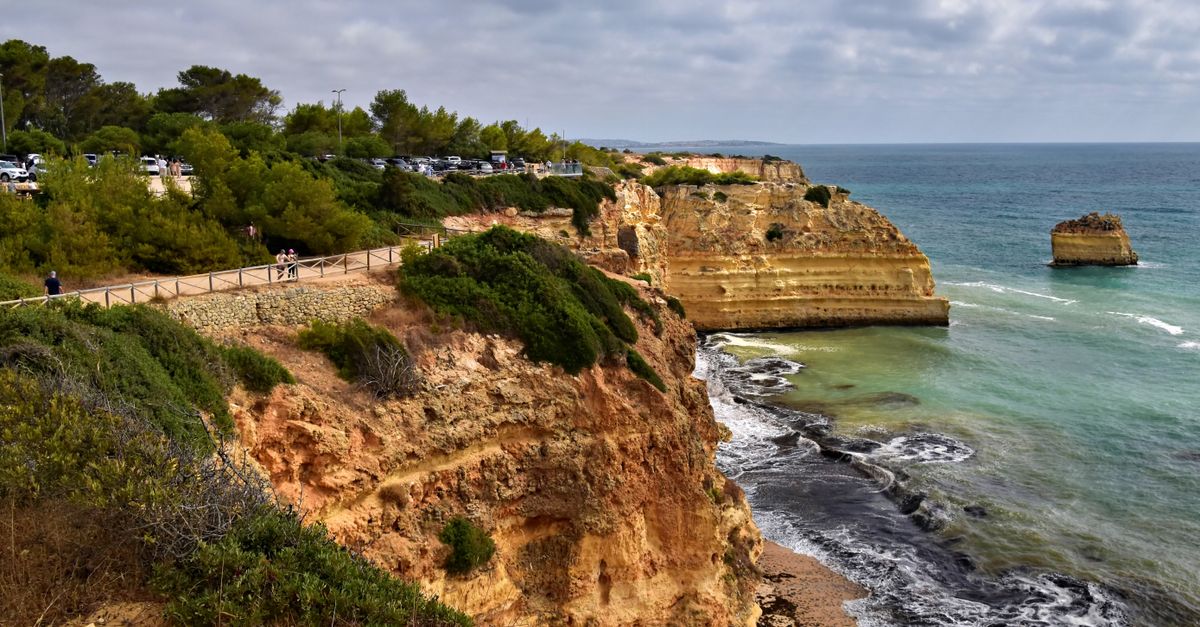
Walk the Seven Hanging Valleys Trail between Praia da Marinha and Praia da Vale Centeanes. The approximately 12-kilometre round trip passes cliffs, beaches, arches, caves, and repeated viewpoints; bring ample water because there is little shade.
-
Benagil CaveBenagil Cave, Lagoa, Algarve, Portugal
Stop at Benagil Caves from the trail viewpoint to see the ceiling opening and sunlight entering the cave. Entering the cave itself requires a guided kayak or boat tour from nearby beaches.
-
Hidden Beach near Seven Hanging Valleys TrailHidden Beach near Seven Hanging Valleys Trail, Algarve, Portugal
Follow the source's detour to a quieter hidden beach and cave reached from the coastal route. Treat the sandy access as exploratory rather than a formal, fully signed trail.
-
Mount FóiaMount Fóia, Monchique, Algarve, Portugal
Hike around Mount Fóia, the Algarve's highest peak at roughly 900 metres. Bring a jacket even when the coast is warm, and use sunscreen because UV can remain intense through cloud and wind.
-
Mount Fóia Trail Water Refill PointMount Fóia Trail Water Refill Point, Monchique, Portugal
Use the marked water refill point with benches and a table during the Mount Fóia walk. It is a practical stop for refilling a bottle before continuing through the exposed mountain terrain.
-
Mount Fóia Forest TrailMount Fóia Forest Trail, Monchique, Portugal
Take the forest section near Mount Fóia for a cooler, greener change from the open coastal cliffs. Check trail access locally because the source encountered a fenced and closed section and had to reroute.
-
Passadiços do PaivaPassadiços do Paiva, Monchique, Algarve, Portugal
Walk the Passadiços do Paiva walkways for a short, easier mountain outing with forest, rocky landscapes, hills, and a suspension bridge above a gorge. The cooler air makes it a useful contrast to the exposed coast.
Days 7-8 Sagres Fortresses & Atlantic Sunset
Finish at the southwestern edge of mainland Europe, where the landscape is rawer, the cliffs taller, and the wind stronger. Keep a warm layer for exposed viewpoints. South-facing beaches are calmer for swimming, while west-facing beaches are better suited to surfing and water sports; end the route at Cabo de São Vicente for sunset.
-
Fortaleza de SagresFortaleza de Sagres, Sagres, Portugal
Explore Fortaleza de Sagres, a fifteenth-century fortress on a dramatic Atlantic cape. The earthquake-damaged complex was largely renovated, but the surviving wall and open-ocean position convey why this was once viewed as the edge of the known world.
-
Igreja de Nossa Senhora da GraçaIgreja de Nossa Senhora da Graça, Fortaleza de Sagres, Portugal
See Church of Nossa Senhora da Graça within the fortress area. The source identifies it as an original fifteenth-century building associated with Henry the Navigator.
-
Bateria NovaBateria Nova, Sagres, Portugal
Visit Bateria Nova for its elevated ocean outlook and historical artillery context. It is a former defensive position rather than a purpose-built viewpoint, with open rocks and strong coastal wind.
-
Forte de BelicheForte de Beliche, Sagres, Portugal
Stop at Forte de Beliche for the exterior fortress, walking path, and ocean view. The museum interior may be closed, but the outside setting is the main reason to visit.
-
Praia de MaretaPraia de Mareta, Sagres, Portugal
Use the south-facing Sagres coast for a calmer beach day suitable for swimming and sunbathing. This is the gentler-water option described in contrast with the more powerful west-facing surf coast.
-
Cabo de São VicenteCabo de São Vicente, Sagres, Portugal
Finish at Cabo de São Vicente for sunset above cliffs rising more than 70 metres over the ocean. Arrive before the sun drops to choose a wind-sheltered viewing position; the lighthouse and southwestern setting make the sunset feel like an event.