

Public travel plan
Seven Madrid Day Trips for History, Castles & Storybook Cities
Use Madrid as your base and take one day trip per destination. The source describes combining Segovia and Ávila in one day as a demanding logistical challenge, so this itinerary separates them. For rail trips, check sch…

Source videos
Travel inspiration behind this plan
Plan notes
Useful context before you go
Use Madrid as your base and take one day trip per destination. The source describes combining Segovia and Ávila in one day as a demanding logistical challenge, so this itinerary separates them. For rail trips, check schedules and book ahead where advised: Toledo trains sell out quickly, and Salamanca fares can rise when booked late. Keep mobile data available for routes, schedules, and tickets. The creator recommends comparing organized tours with independent travel and checking whether guide and attraction tickets are included. Pack comfortable walking shoes for historic centers and uphill station approaches.
Itinerary highlights
What is in this plan
Day 1 — Segovia’s Aqueduct & Castle
Take the high-speed Avant or AVE from Madrid-Chamartín to Segovia-Guiomar; the source estimates a 28-minute train ride. The station is outside the city center, so take bus line 11 to the aqueduct. Allow time for the old town, Alcázar, and cathedral.
-
Aqueduct of SegoviaAqueduct of Segovia, Segovia, Spain
Start at the Roman aqueduct in the city center. Its granite blocks are held together without cement; bus line 11 from Segovia-Guiomar drops you near the aqueduct.
-
Alcázar of SegoviaAlcázar of Segovia, Segovia, Spain
Continue into the old town to visit the Alcázar. Look for its circular towers and dark slate roofs, which the source connects with the familiar fairy-tale castle silhouette.
-
Segovia CathedralSegovia Cathedral, Segovia, Spain
Visit Segovia Cathedral, singled out as one of Spain’s most beautiful cathedrals.
-
Madrid-Chamartín-Clara Campoamor StationMadrid-Chamartín-Clara Campoamor Station, Madrid, Spain
The high-speed train for Segovia departs from Madrid-Chamartín. Check the Avant or AVE timetable before setting out.
-
Segovia-Guiomar Railway StationSegovia-Guiomar Railway Station, Segovia, Spain
Segovia-Guiomar is on the outskirts. From here, the source recommends bus line 11 to reach the aqueduct in about 15 minutes.
Day 2 — Ávila’s Medieval Walls
Take the medium-distance train, which the source says mainly departs from Príncipe Pío and takes about an hour and a half. From Ávila station, the city walls are roughly a 10–15 minute walk. The source advises against combining Ávila and Segovia by train in one day unless you are prepared for an early start and complicated connections.
-
Walls of ÁvilaWalls of Ávila, Ávila, Spain
Walk to the medieval walls, then climb up and walk along the ramparts. The source describes more than two kilometers of walls and 87 towers.
-
Madrid Príncipe Pío StationMadrid Príncipe Pío Station, Madrid, Spain
The medium-distance train to Ávila mainly departs from this Madrid station. Check the departure board when planning the day.
-
Ávila Railway StationÁvila Railway Station, Ávila, Spain
Ávila station is close enough to the center for the source-described walk of about 10–15 minutes to the city walls.
Day 3 — Toledo, the Imperial City
The Avant train from Atocha takes about 30–33 minutes. Book at least a couple of days ahead, especially for weekends. From Toledo station, walk uphill to Plaza de Zocodover or take a local bus. Keep mobile data available for navigation through the old town’s maze of streets.
-
Madrid Atocha StationMadrid Atocha Station, Madrid, Spain
Take the Avant train from this station to Toledo. The source warns that Toledo trains sell out fastest, particularly on weekends, and recommends booking in advance.
-
Toledo Railway StationToledo Railway Station, Toledo, Spain
Pause to look at the station itself: its Neo-Mudéjar design includes notable ceilings and stained-glass windows.
-
Puerta de BisagraPuerta de Bisagra, Toledo, Spain
Use the gate as an entrance to Toledo’s stone lanes. The source recommends wandering through the old town rather than trying to avoid getting lost.
-
Toledo CathedralToledo Cathedral, Toledo, Spain
Visit Toledo Cathedral and take time to appreciate its gold-toned interior and Gothic art.
-
Synagogue of Santa María la BlancaSynagogue of Santa María la Blanca, Toledo, Spain
See the synagogue named in the source as one of Toledo’s notable historic sites.
-
Monastery of San Juan de los ReyesMonastery of San Juan de los Reyes, Toledo, Spain
Add the Monastery of San Juan de los Reyes to the old-town sightseeing route; it is another specific historic stop mentioned by the source.
-
Plaza de ZocodoverPlaza de Zocodover, Toledo, Spain
Use this central square as the uphill walk’s destination from the railway station, or take the local bus up in about five minutes.
-
San Martín BridgeSan Martín Bridge, Toledo, Spain
Cross the bridge at sunset for the source-recommended view of Toledo’s walls lighting up.
Day 4 — Consuegra’s Windmills
The source describes a direct bus from Madrid’s Méndez Álvaro station taking about two hours, but recommends a rental car or guided tour for this day trip. If going independently by bus, check the limited schedule carefully. The windmills stand on Cerro Calderico and are the day’s central stop.
-
Estación Sur de AutobusesEstación Sur de Autobuses, Méndez Álvaro, Madrid, Spain
The source identifies this as the Madrid departure point for the bus to Consuegra, with a journey of about two hours. It also recommends considering a rental car or guided tour because bus schedules are limited.
-
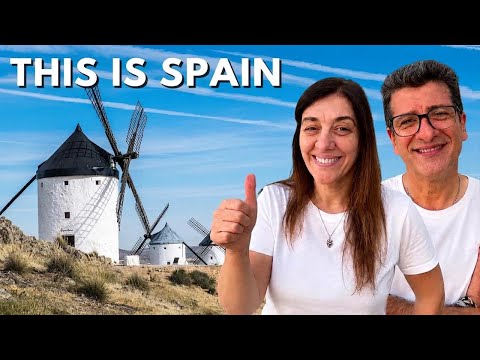
Molinos de Viento de ConsuegraMolinos de Viento de Consuegra, Cerro Calderico, Consuegra, Spain
Head to the top of Cerro Calderico to see Consuegra’s windmills against the La Mancha plain. The source describes 12 windmills here and calls the setting especially photogenic.
-
Molino BoleroMolino Bolero, Consuegra, Spain
Bolero is one of the specifically named windmills among the group on Cerro Calderico.
-
Molino SanchoMolino Sancho, Consuegra, Spain
Sancho is another named windmill in the Consuegra group; some windmills retain original 16th-century machinery.
Day 5 — Salamanca, the Golden City
Take the direct Alvia from Chamartín; the source estimates about 1 hour 40 minutes. The station is roughly a 15-minute walk from the historic center. Book ahead to secure a seat and a better fare. The creator considers Salamanca best explored on its own, though some day tours combine it with Ávila.
-
Madrid-Chamartín-Clara Campoamor StationMadrid-Chamartín-Clara Campoamor Station, Madrid, Spain
Take the Alvia train to Salamanca from Chamartín. The source recommends booking ahead because same-day long-distance tickets can cost more.
-
Salamanca Railway StationSalamanca Railway Station, Salamanca, Spain
Salamanca station is about a 15-minute walk from the historic center, making the walk a straightforward introduction to the city.
-
University of SalamancaUniversity of Salamanca, Salamanca, Spain
Visit the university, one of Europe’s oldest. The source points out the richly detailed façade and its hidden symbols.
-
Plaza Mayor de SalamancaPlaza Mayor de Salamanca, Salamanca, Spain
Spend time in Salamanca’s main square, described as an impressive Baroque space and one of Spain’s most beautiful plazas.
-
Old Cathedral of SalamancaOld Cathedral of Salamanca, Salamanca, Spain
Visit the Old Cathedral, one of Salamanca’s two neighboring cathedrals.
-
Old Cathedral of SalamancaOld Cathedral of Salamanca, Salamanca, Spain
The New Cathedral stands beside the Old Cathedral. Look among the carved reliefs around its door for the astronaut detail mentioned in the source.
Day 6 — El Escorial’s Monastery & Royal History
Reach San Lorenzo de El Escorial by the C8 commuter line from stations such as Atocha or Chamartín, or take bus 661 or 664 from Moncloa. The source describes an uphill walk of about 10–15 minutes from the station to the monastery. Tours may combine the monastery with the Valley of the Fallen or Segovia; check what transport and entry are included.
-
Royal Site of San Lorenzo de El EscorialRoyal Site of San Lorenzo de El Escorial, San Lorenzo de El Escorial, Spain
Explore the 16th-century monastery commissioned by Philip II. The source highlights its austere granite architecture, library, and Royal Pantheon.
-
Royal Site of San Lorenzo de El EscorialRoyal Site of San Lorenzo de El Escorial, San Lorenzo de El Escorial, Spain
Inside the monastery, see the library known for its colorful frescoes and thousands of old books.
-
Royal Site of San Lorenzo de El EscorialRoyal Site of San Lorenzo de El Escorial, San Lorenzo de El Escorial, Spain
The source describes the Royal Pantheon as an octagonal room of marble and gold where many Spanish monarchs are buried.
-
Madrid Atocha StationMadrid Atocha Station, Madrid, Spain
The C8 commuter line is one way to reach the town; the source names Atocha and Chamartín as departure-station options.
-
Moncloa Transport InterchangeMoncloa Transport Interchange, Madrid, Spain
The source names the Moncloa interchange as the departure point for buses 661 and 664 to San Lorenzo de El Escorial.
Day 7 — Cuenca’s Hanging Houses & Gorges
Take the AVE from Atocha to Cuenca-Fernando Zóbel; the source estimates 55–60 minutes. The station is outside the historic center, so take bus line 1 or a taxi, then explore on foot. The Enchanted City is a nearby natural park, but the source says including it in a self-guided public-transport day is difficult; consider an organized tour if you want that additional stop.
-
Cuenca-Fernando Zóbel Railway StationCuenca-Fernando Zóbel Railway Station, Cuenca, Spain
Arrive here by AVE from Atocha. The source estimates a 55–60-minute train journey and says the station is outside the historic center.
-
Casas Colgadas de CuencaCasas Colgadas de Cuenca, Cuenca, Spain
See Cuenca’s famous Hanging Houses, whose buildings appear to project over the gorge. The source describes them as a signature sight of the old town.
-
San Pablo BridgeSan Pablo Bridge, Cuenca, Spain
Cross the San Pablo Bridge for the dramatic gorge setting described in the source.
-
Cuenca CathedralCuenca Cathedral, Cuenca, Spain
Visit Cuenca Cathedral, identified in the source as the first Gothic cathedral in Castile.
-
Cuenca Old TownCasco Antiguo de Cuenca, Cuenca, Spain
The source recommends bus line 1 or a taxi from Fernando Zóbel station to the upper city, then walking downhill to enjoy the views.
-
Ciudad EncantadaCiudad Encantada, Valdecabras, Cuenca, Spain
This nearby natural park is known for rock formations that resemble animals and objects. The source says a guided tour is the practical option for combining it with Cuenca in one day; doing so independently by public transport is difficult.