

Public travel plan
The Algarve’s Historic Coast: A Source-Faithful Road Trip
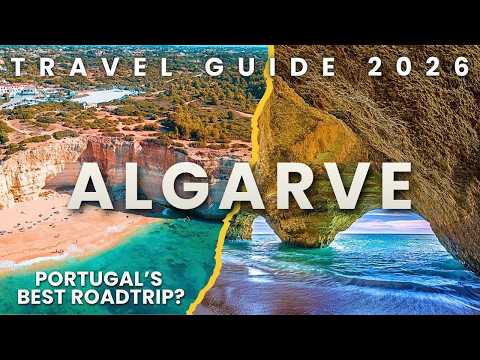
Follow the coast from Sagres east to Tavira, allowing time to explore each area rather than treating the Algarve as a quick checklist. The guide specifically recommends a rental car for reaching smaller towns, viewpoint…

Source videos
Travel inspiration behind this plan
Plan notes
Useful context before you go
Follow the coast from Sagres east to Tavira, allowing time to explore each area rather than treating the Algarve as a quick checklist. The guide specifically recommends a rental car for reaching smaller towns, viewpoints, and beaches beyond the main resorts. Keep the route in this west-to-east order to avoid backtracking. No extra locations have been added beyond places identified in the source.
Resources for this plan
Shared by the source creators. These are not VibePlanit endorsements and may be affiliate links.
View accommodation · The World From Above ↗ Creator link · may be an affiliate link
View accommodation · The World From Above ↗ Creator link · may be an affiliate link
View accommodation · The World From Above ↗ Creator link · may be an affiliate link
View accommodation · The World From Above ↗ Creator link · may be an affiliate link
View accommodation · The World From Above ↗ Creator link · may be an affiliate link
View accommodation · The World From Above ↗ Creator link · may be an affiliate link
View accommodation · The World From Above ↗ Creator link · may be an affiliate link
Itinerary highlights
What is in this plan
Days 1–2: Sagres and the Western Headland
Begin at the western end of the route. The guide describes Sagres as a small, relaxed town with a maritime history, a coastal fortress, and a surfing reputation. Give the headland time rather than rushing straight east.
-
SagresSagres, Portugal
Start in this small, relaxed town at the far western tip of the Algarve. The surrounding coastline is described as wind-swept, with Atlantic beaches and reliable surf swells.
-
Fortaleza de SagresFortaleza de Sagres, Sagres, Portugal
Visit the fortress on the strategic headland. The guide connects it to Portugal’s Age of Discovery and notes that it was rebuilt after Sir Francis Drake destroyed it in 1587.
Days 3–4: Lagos’s Old Town and Coast
Continue east to Lagos for a combination of historic streets and cliff scenery. The guide highlights the town’s Age of Discovery history, walled old center, and beaches beneath the cliffs; it also describes boat trips and kayaking along this coastline.
-
LagosLagos, Portugal
Explore the town that served as an important Portuguese port during the Age of Discovery. The guide also acknowledges the darker history of the 1444 slave market; approach that history with care and reflection.
-
Lagos Old TownLagos Old Town, Lagos, Portugal
Wander the historic center enclosed by old walls. The source describes narrow streets, lively squares, and cafes as part of its relaxed, walkable atmosphere.
Days 5–6: Portimão, Carvoeiro, and Benagil
Use this central-coast phase for resort-town facilities and the limestone shoreline. The guide describes Portimão as a practical base, then highlights Carvoeiro’s cliff paths and the Benagil sea cave. It mentions boat trips and kayaking in the coastal caves and passages around Lagos, and cliff walking trails in the Carvoeiro area.
-
PortimãoPortimão, Portugal
Consider Portimão as a convenient base: the guide describes a lively marina, shopping, restaurants, accommodation, and access to the surrounding coastline.
-
Praia da RochaPraia da Rocha, Portimão, Portugal
Spend time on the long sandy beach backed by cliffs. The source notes its promenade, beach bars, and ample space, including during busy summer months.
-
CarvoeiroCarvoeiro, Portugal
Visit the former fishing village, described as whitewashed buildings gathered around a small sandy beach. The source also notes cliffside walking trails with rock formations and panoramic viewpoints; it does not specify individual trail or viewpoint names.
-
Benagil CaveBenagil Cave, Lagoa, Portugal
See the famous sea cave beneath the limestone cliffs. Its ceiling opening formed naturally as rock collapsed over thousands of years. The guide also describes this stretch as rich in sea arches, hidden beaches, and viewpoints.
Day 7: Albufeira’s Resort Coast
This is the busiest resort phase of the route. The guide describes a contrast between traditional streets and the modern holiday infrastructure, and notes that the coastline includes both small cliff-backed coves and larger sandy beaches.
Day 8: Faro’s Historic Center and Lagoon
Make time for Faro beyond the arrival point. The guide presents it as a quieter alternative to the beach resorts, with a historic center, museums, and access to a lagoon system of islands and wetlands that supports bird and marine life.
-
Faro Old TownFaro Old Town, Faro, Portugal
Explore the historic center behind the old city walls. The source notes that Faro’s center survived the 1755 earthquake better than many Portuguese cities and describes museums, historic buildings, and a more local atmosphere.
-
Ria FormosaRia Formosa, Faro, Portugal
Visit the lagoon system identified as an important natural area, with islands, wetlands, and habitats for birds and marine life. The source does not name individual islands or specific wildlife-viewing sites.
Day 9: Tavira and the Eastern Algarve
Finish east of Faro in Tavira, where the guide describes a slower pace and more than 2,000 years of layered history. Explore on foot, using the town’s old bridge and castle gardens as source-identified stops.
-
Tavira Historic CentreTavira Historic Centre, Tavira, Portugal
Walk through this riverside town, described as one of the Algarve’s most beautiful. The guide traces its history through Phoenician, Roman, and Moorish periods and its later role as a trading port.
-
Tavira Old BridgeTavira Old Bridge, Tavira, Portugal
Cross the old bridge as part of an on-foot exploration of Tavira. The source identifies it as a town highlight but does not provide a more specific bridge name.
-
Tavira CastleTavira Castle, Tavira, Portugal
Visit the castle gardens, another on-foot stop specifically mentioned in the guide. The source does not name a particular garden within the castle grounds.