

Public travel plan
The Five-Day Badr Seerah Expedition
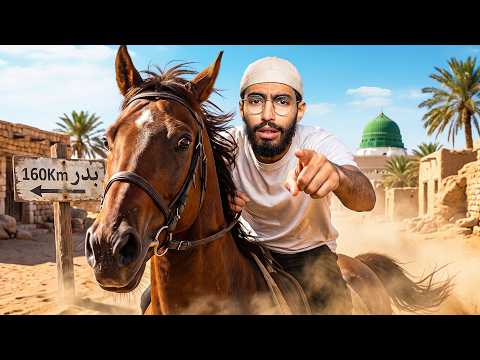
A source-faithful five-day historical pilgrimage following the approximately 160-kilometre route from Medina to Badr on horseback. The journey is presented as a physically demanding expedition involving desert travel, c…

Source videos
Travel inspiration behind this plan
Plan notes
Useful context before you go
A source-faithful five-day historical pilgrimage following the approximately 160-kilometre route from Medina to Badr on horseback. The journey is presented as a physically demanding expedition involving desert travel, camping, prayer, fasting during Ramadan, horse care, long rest stops, and reflection on the Battle of Badr. The source specifically shows temperatures above 40°C, unexpectedly cold nights, strong wind, darkness, dehydration, painful knees, and difficult horse handling. Prepare only for the conditions demonstrated: tent, padding, sleeping bag, modest clothing suitable for riding and prayer, water, sun protection, warm night layers, and basic first-aid supplies. The source emphasizes following the appointed Amir's riding order, feeding and watering the horse, allowing the horse to trust the rider, resting regularly, and never treating galloping or horse mounting casually. This itinerary does not add unmentioned hotels, tour operators, restaurants, or route stops. The source does not provide trip pricing, so period cost fields exclude unreported expenses.
Itinerary highlights
What is in this plan
Day 1 Medina Preparation and Departure
Begin with intention, prayer, preparation, and the first riding stage. The source describes a physically demanding start, fasting, horse care, strict group organization, prayer stops, and the first iftar. Do not treat the riding schedule as casual sightseeing.
-
Al-Masjid an-NabawiAl-Masjid an-Nabawi, Medina, Saudi Arabia
Visit the Prophet's Mosque before departure to send salam, reset the journey's intention, and reflect on why the route matters.
-
Masjid al-SuqyaMasjid al-Suqya, Medina, Saudi Arabia
Pause at Masjid al-Suqya, where the journey explains that the Prophet made dua for Medina and asked Allah to grant it double the barakah of Mecca.
-
MedinaMedina, Saudi Arabia
Start the horseback route with the appointed Amir's instructions. The riding order is treated as a safety rule, and the group follows the captain's directions rather than improvising positions.
-
Medina to Badr Historic RouteMedina to Badr Historic Route, Saudi Arabia
Use the first riding stage to settle into the horse and the fasting conditions. The source describes dizziness, dry lips, thirst, and the unusual strain of traveling while fasted.
-
Medina to Badr Riding CampMedina to Badr Historic Route, Saudi Arabia
At the riding camp, feed the horse yourself and provide water. The source presents this as a way to build trust and strengthen the relationship needed for a long journey.
-
Medina to Badr Riding CampMedina to Badr Historic Route, Saudi Arabia
End the first stage with prayer and iftar at the stopping point. The source describes the brothers arriving exhausted and sharing their first iftar on the route.
Day 2 Night Desert Camp and Horseback Hardship
The second phase emphasizes endurance, changing temperatures, darkness, and simple desert camping. The source shows a transition from extreme heat to cold night conditions, with the group walking to water and arriving at camp after several hours.
-
Medina to Badr Riding CampMedina to Badr Historic Route, Saudi Arabia
Expect the desert temperature to change sharply after sunset. The source specifically describes an unexpectedly cold night following daytime heat.
-
Second Route Water StopMedina to Badr Historic Route, Saudi Arabia
Walk rather than ride when the group moves toward water in darkness. The source describes limited visibility, strange sounds, and the mental challenge of night travel without modern lighting.
-
Second Route Water StopMedina to Badr Historic Route, Saudi Arabia
Reach the camp after the long night stage and allow a full recovery period. The riders describe arriving after roughly three hours, with aching knees, toes, and whole-body exhaustion.
-
Second Route Water StopMedina to Badr Historic Route, Saudi Arabia
Set up the simple sleeping system shown on the route: tent, padding, and sleeping bag. Clothing is used as a practical pillow, and the shelter must withstand wind.
-
Second Route Water StopMedina to Badr Historic Route, Saudi Arabia
Secure the horse near camp using the simple method described: tie it with a rope to a tree while the group sleeps in tents.
-
Second Route Water StopMedina to Badr Historic Route, Saudi Arabia
Keep the next morning deliberately paced: take the horse, walk, rest, sleep, and repeat. The source presents patience and recovery as essential rather than optional.
Day 3 Historic Route Landmarks and the Mosque Stop
This phase follows the route's historical interpretation: resting beneath a distinctive tree, changing horses, galloping across the landscape, managing a fall, and stopping at a mosque associated with the return from Badr.
-
Historic Route TreeHistoric Route Tree, Medina to Badr, Saudi Arabia
Stop beneath the distinctive textured tree described as a place where the Prophet used to pray or rest while traveling between Mecca and Medina. Treat this as a historical reflection stop, not a general picnic location.
-
Historic Route TreeHistoric Route Tree, Medina to Badr, Saudi Arabia
Use the tree's dense shade as a natural rest point. The source highlights the contrast between the heat outside and the coolness beneath the canopy.
-
Historic Badr Route Riding StopMedina to Badr Historic Route, Saudi Arabia
Allow horse changes only under the group's supervision. The source shows riders trying different horses to find a suitable match for the journey.
-
Historic Badr Route Riding StopMedina to Badr Historic Route, Saudi Arabia
Treat galloping as a controlled riding segment, not an informal thrill ride. The source describes the exhilaration of finding rhythm with the horse, followed by horse fatigue.
-
Historic Badr Route Riding StopMedina to Badr Historic Route, Saudi Arabia
Build in a recovery pause after riding, especially after any loss of balance. The source records a rider falling during a gallop, injuring his hands, then checking himself before continuing.
-
Historic Route MosqueHistoric Route Mosque, Medina to Badr, Saudi Arabia
Visit the mosque described as a place where the Prophet prayed while returning from Badr and where seventy prophets are said to have prayed while traveling toward pilgrimage. The source does not provide a name for this mosque, so no additional identification is added.
Day 4 Camp After Badr and Well of al-Safwan
The fourth phase slows down. The source describes a shorter distance, rest and preparation for the final approach, prayer, an iftar delivery, and a well associated with the Prophet's stop, rest, prayer, and drinking.
-
Final Route CampMedina to Badr Historic Route, Saudi Arabia
Use the shorter riding distance as a recovery day rather than adding extra mileage. The source says the group arrived quickly and spent much of the day slowing down and preparing.
-
Final Route CampMedina to Badr Historic Route, Saudi Arabia
Pray at the camp before the final approach. Prayer is repeatedly integrated into the route rather than treated as an activity added after riding.
-
Final Route CampMedina to Badr Historic Route, Saudi Arabia
Prepare the final day's equipment and allow the oldest member of the group to rest. The source frames this evening as a transition from endurance to anticipation.
-
Well of al-SafwanWell of al-Safwan, Badr, Saudi Arabia
Visit the well of al-Safwan, identified in the source as the place where the Prophet stopped, rested, prayed, and drank. The source emphasizes the freshness of the water after days in the desert.
-
Well of al-SafwanWell of al-Safwan, Badr, Saudi Arabia
Use the well stop for washing and cooling after the hot route, following the source's emphasis on how restorative clean water felt in the desert.
-
Final Route CampMedina to Badr Historic Route, Saudi Arabia
Break the fast during the route or at camp, as the group did with a delivered iftar and a cooked meal that included biryani and tender lamb.
Day 5 Arrival at Badr Battlefield
The final day follows the route into Badr, the Sahabah cemetery, the battlefield landscape, and the historical markers described in the source. The arrival is intended to be reflective and historically focused after five days of travel.
-
BadrBadr, Al Madinah Province, Saudi Arabia
Enter Badr slowly and observe the mountains, valleys, and open ground. The source encourages imagining the landscape as it may have appeared during the battle 1,400 years ago.
-
Badr Martyrs CemeteryBadr Martyrs Cemetery, Badr, Saudi Arabia
Visit the cemetery identified in the source as the resting place of fourteen companions who were martyred in the battle.
-
Battlefield of BadrBattlefield of Badr, Badr, Saudi Arabia
Spend the main arrival period at the battlefield described in the source. Use the open ground and surrounding terrain to reflect on the scale of the confrontation rather than treating the site as a quick photo stop.
-
Battlefield of BadrBattlefield of Badr, Badr, Saudi Arabia
Reflect on the historical imbalance described at the battlefield: the believers had 313 people, while the opposing force was substantially larger. The source connects this context to the hardship of reaching the site.
-
Well of al-SafwanWell of al-Safwan, Badr, Saudi Arabia
Look for the rock markings shown along the route and associated with the post-battle camp. The source describes multiple numbered markings and says one marker was written by a Sahabi more than a thousand years ago.
-
Battlefield of BadrBattlefield of Badr, Badr, Saudi Arabia
End at the battlefield with a final prayer and reflection on the five-day effort. The source contrasts the modern group's water, sleep, and equipment with the much harsher conditions faced by the early Muslims.