

Public travel plan
The Island Explorer’s 7-Day Mauritius Culture, Coast & Waterfall Route
Mauritius suits a self-guided island explorer who wants to combine cultural context, beaches, volcanic scenery, waterfalls, and practical coastal bases. Renting a car is the most flexible option for reaching the interio…

Source videos
Travel inspiration behind this plan
Plan notes
Useful context before you go
Mauritius suits a self-guided island explorer who wants to combine cultural context, beaches, volcanic scenery, waterfalls, and practical coastal bases. Renting a car is the most flexible option for reaching the interior, smaller towns, and different beaches while keeping one main accommodation base; traffic can be slow around Port Louis and larger towns. Taxis and organized excursions are alternatives if you prefer not to drive. Mauritius is warm year-round, with generally warmer and wetter conditions from November to April and cooler, drier conditions from May to October. The west and north are usually drier, while the east and south can be windier and wetter. Cyclone season is mainly November to April, so shoulder seasons offer a useful balance of warmth and lower rainfall.
Resources for this plan
Shared by the source creators. These are not VibePlanit endorsements and may be affiliate links.
View Flic en Flac stays · The World From Above ↗ Creator link · may be an affiliate link
View Le Morne stays · The World From Above ↗ Creator link · may be an affiliate link
View Chamarel stays · The World From Above ↗ Creator link · may be an affiliate link
View Grand Baie stays · The World From Above ↗ Creator link · may be an affiliate link
View Mont Choisy stays · The World From Above ↗ Creator link · may be an affiliate link
View Trou aux Biches stays · The World From Above ↗ Creator link · may be an affiliate link
Itinerary highlights
What is in this plan
Days 1-2: Port Louis and the West Coast Base
Begin in Port Louis for the island’s cultural and historical context, then use Flic en Flac as a relaxed west-coast base. The west-facing beach is especially suitable for sunsets, and the area has nearby hotels, restaurants, and shops without being focused on nightlife.
-
Port LouisPort Louis, Mauritius
Start with Port Louis, the compact capital between the harbor and dramatic mountains. Explore its markets, shops, historic buildings, and waterfront to experience the island beyond its beaches.
-
Flic en FlacFlic en Flac, Mauritius
Use Flic en Flac as the first practical base: hotels, restaurants, and shops sit directly behind the long sandy beach, making it possible to explore without depending entirely on a resort.
-
Flic en Flac BeachFlic en Flac Beach, Flic en Flac, Mauritius
Spend time on Flic en Flac’s long sandy beach, where the coral reef protects a relatively calm lagoon. This is the main west-coast beach experience in the route.
-
Flic en Flac BeachFlic en Flac Beach, Flic en Flac, Mauritius
Return to the west-facing shoreline near sunset; the orientation makes Flic en Flac one of the route’s clearest sunset stops.
-
Flic en FlacFlic en Flac, Mauritius
Use Flic en Flac as the launch point for the west coast’s major inland and southern sites rather than changing hotels for every stop.
-
Flic en FlacFlic en Flac, Mauritius
Keep this base relaxed rather than nightlife-oriented, with the beach, lagoon, restaurants, and shops forming an easy low-pressure opening to the island.
Days 3-5: Le Morne, Chamarel and Tamarin Falls
Move south and inland for Mauritius’s strongest combination of history, volcanic landscapes, forests, valleys, and waterfalls. Le Morne is the priority landmark; guided access is specifically important for the mountain hike and recommended for exploring Tamarin Falls’ viewpoints and pools.
-
Le Morne BrabantLe Morne Brabant, Le Morne, Mauritius
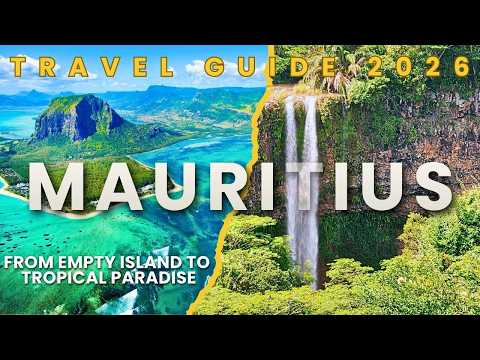
Prioritize Le Morne Brabant, the island’s recognizable mountain rising above a turquoise lagoon. Its landscape and UNESCO World Heritage status make it a central stop rather than a quick passing viewpoint.
-
Le Morne BrabantLe Morne Brabant, Le Morne, Mauritius
Read the mountain as a historical site as well as a natural landmark: escaped enslaved people used the mountain and surrounding cliffs as refuge. This gives the stop its deeper cultural meaning.
-
Le Morne BrabantLe Morne Brabant, Le Morne, Mauritius
If hiking Le Morne Brabant, arrange a guide in advance; guided access is required for the mountain hike.
-
Le Morne LagoonLe Morne Lagoon, Le Morne, Mauritius
Le Morne’s turquoise lagoon is also associated with kitesurfing and other water sports; treat this as the active-water option for the southern coast.
-
ChamarelChamarel, Mauritius
Continue inland to Chamarel, where volcanic origins are expressed through mountains, forests, and deep valleys. The area provides the route’s clearest change from coast to interior landscape.
-
Chamarel WaterfallChamarel Waterfall, Chamarel, Mauritius
Visit Chamarel Waterfall, where water drops nearly 100 metres into a forested valley. Allow time for the natural setting rather than treating it as a brief roadside stop.
-
Seven Coloured EarthSeven Coloured Earth, Chamarel, Mauritius
Pair the waterfall with Seven Coloured Earth, a compact area of naturally coloured volcanic soil nearby.
-
Tamarin FallsTamarin Falls, Mauritius
Finish the southern and inland phase at Tamarin Falls. The forest trail leads to different viewpoints and pools; visiting independently is possible, but a local guide is recommended for exploring the full area.
Days 6-7: Grand Baie and the Northern Beaches
End in the north, using Grand Baie when you want the liveliest concentration of hotels, restaurants, bars, shops, and boat departures. Balance it with the quieter beaches of Mont Choisy and the calm, shallow lagoon at Trou aux Biches.
-
Grand BaieGrand Baie, Mauritius
Base the final phase in Grand Baie if you want the greatest choice of accommodation, restaurants, bars, and shops around a sheltered bay.
-
Grand Baie Public BeachGrand Baie Public Beach, Grand Baie, Mauritius
Use Grand Baie as the northern departure point for boat trips around the northern coast and nearby islands.
-
Grand BaieGrand Baie, Mauritius
Spend an evening around Grand Baie’s active center, where the concentration of bars, restaurants, and shops makes it the liveliest part of the island.
-
Mont Choisy BeachMont Choisy Beach, Mont Choisy, Mauritius
Choose Mont Choisy for a quieter northern beach experience: its long stretch of sand is backed by trees and offers plenty of open space.
-
Trou aux Biches BeachTrou aux Biches Beach, Trou aux Biches, Mauritius
Visit Trou aux Biches for clear, shallow water and a beautiful lagoon. The nearby hotels, restaurants, and shops also make it a practical alternative northern base.
-
Trou aux Biches BeachTrou aux Biches Beach, Trou aux Biches, Mauritius
Use Trou aux Biches as the final low-key beach stop when you want calm water while remaining close to practical hotels, restaurants, and shops.